What Unreasonable Hospitality Means in Any Business - Not Just a Restaurant
Every business serves someone. A patient in a waiting room. A client reviewing a proposal. A family walking onto a dealership lot. An attendee finding their seat at a conference. Underneath all of it sits a quieter question than most companies like to admit: when people deal with us, do they feel noticed, or do they feel processed?
That question is what unreasonable hospitality is about, and it has never been a restaurant idea.
What unreasonable hospitality actually means
The phrase was popularized by restaurateur Will Guidara, who used it to describe giving people more than they expect. It took hold in fine dining because that world lives and dies on how guests feel. But the principle was never confined to a dining room. At its core, hospitality is the intentional way an organization shows people that it notices, understands, and cares. Any business that serves human beings is already in that business, whether or not it has decided to be deliberate about it.
I am a Certified Unreasonable Hospitality Coach, and most of the work I do has nothing to do with food. It has to do with helping leaders see that the thing their customers remember is rarely the product itself. It is how they were treated on the way to it. That is also why hospitality belongs on the list of things a company competes on, not off to the side as a nicety.
Care is not the same as spending money
There is a common misreading of hospitality that turns it into a budget line. Send a nicer gift. Add a surprise. Comp something. Those gestures can be lovely, but they are not what makes hospitality an advantage, and they do not repeat well.
Memorable care usually costs very little, because it comes from paying attention. A dental office that remembers a patient hates the overhead light and dims it before being asked has done something more powerful than any waiting-room gift basket. A financial advisor who senses a client is anxious about a decision and slows the conversation down has offered something no discount can match.
This is where the difference between service and hospitality becomes practical. Service is what you deliver. Hospitality is how the person feels while receiving it. You can run flawless service alongside cold hospitality, and people will remember the cold.
The trouble with surprise-and-delight tactics is that they are random by design. They depend on someone feeling generous in the moment. Hospitality that lasts is built on standards, not moods.
What it looks like away from a dining room
Once you stop treating hospitality as an industry and start treating it as a discipline, the openings show up everywhere. This is hospitality beyond hotels and restaurants, and it belongs in places that would never describe themselves as hospitality businesses.
In professional services, it can be a law or accounting firm that explains what happens next in plain language instead of leaving an anxious client to guess. In healthcare, it is the practice that treats the fifteen minutes before an appointment as part of the care rather than as dead time. On a dealership lot, it is a salesperson who reads that someone wants room to think instead of a pitch. In financial services, where trust is essentially the product, it is the advisor who checks in after a rough market week without being prompted.
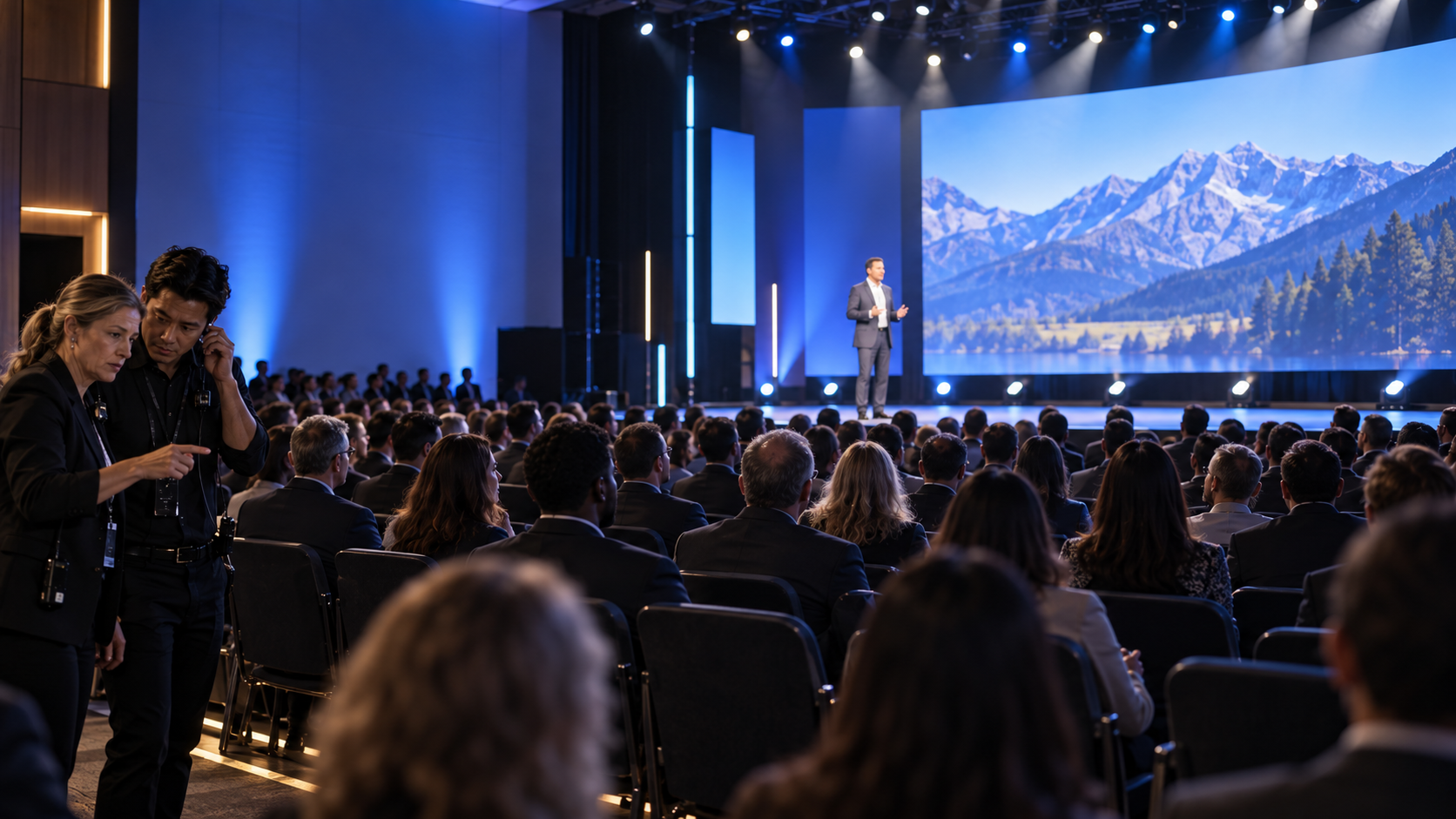
Events are their own version of this. I have spent decades leading high-stakes events, and the moments attendees actually carry home are almost never the ones printed on the run of show. They are the small signals that someone was thinking about them specifically. None of these examples require a hospitality résumé. They require attention, and permission to act on it.
Standards and permission make it repeatable
This is where good intentions usually fall apart. A leader gets inspired, gives a stirring talk about caring more, and nothing has changed by Thursday. Inspiration is not a system.
Hospitality becomes reliable when two things are in place at once. The first is a clear standard, so a team knows what good looks like rather than guessing at it. The second is permission, so people are trusted to act on what they notice without waiting for sign-off.
Those two have to travel together. Standards without permission produce a script, and a script quietly turns capable people into robots reading lines. Permission without standards produces a coin flip, where one employee is wonderful and the next is indifferent. What you want is a team that shares a clear definition of care and has the latitude to deliver it in their own voice. That combination is what lets hospitality scale past the founder or the one naturally gifted employee everyone secretly relies on.
A simple way to hold this with a team is the sentence, "We always ___, even when ___." We always walk a client to the door, even when we are slammed. We always explain the bill before we send it, even when it is uncomfortable. Standards written that way tend to survive a busy day, which is the only test that matters.
The moments most businesses overlook
Most of what a customer remembers happens in three windows, and companies tend to over-invest in the middle one.
Before the core service, there is arrival. How someone is greeted, how clear the instructions were, what the confirmation felt like, whether the wait respected their time. Impressions form before anyone does the real work, and this is where even strong companies quietly undercut themselves. It is worth understanding just how much the first few minutes shape the whole experience.
During the service, hospitality shows up as anticipation. Removing a friction the person has not named yet. Remembering a detail from last time. Catching discomfort and responding to it before it becomes a complaint.
After the service comes follow-up, and this is the window nearly everyone wastes. A note or a check-in that is not a sales pitch tells people the relationship did not end at the transaction. It costs almost nothing, and it gets remembered for a long time.
Questions worth putting in front of your team
If you want to find your own overlooked moments, the exercise is less about brainstorming grand gestures and more about looking honestly at what you already do. A few questions tend to surface more than a strategy session:
Where do people first feel our attention, or the absence of it? What do we consistently notice about the people we serve, and what do we routinely miss? Which moment do we treat as ordinary that the customer actually experiences as meaningful? And where are we delivering perfectly good service while giving people no reason to feel anything at all?
The answers usually point at small, fixable things, which is the encouraging part. Hospitality as a competitive advantage is rarely the product of a dramatic overhaul. It comes from a business deciding what care looks like and making it the standard everywhere, for everyone.
Here is one worth sitting with before you close the tab: name a single way your business currently shows people it cares beyond delivering what they paid for. If that answer comes slowly, it is not a failure. It is exactly where the opportunity is.
Turn attention into a standard
Hospitality stops being a personality trait and becomes an advantage when a whole team works from the same definition of care. If you want to explore how these principles can strengthen your team and your customer experience, that is the heart of our Unreasonable Hospitality workshops, where teams look at their real touchpoints and turn care into a team standard they can actually keep. When you are ready to talk it through, schedule a conversation and we can look at where your experience is already strong and where it quietly falls flat.
Recent Posts