Calm Is a Deliverable
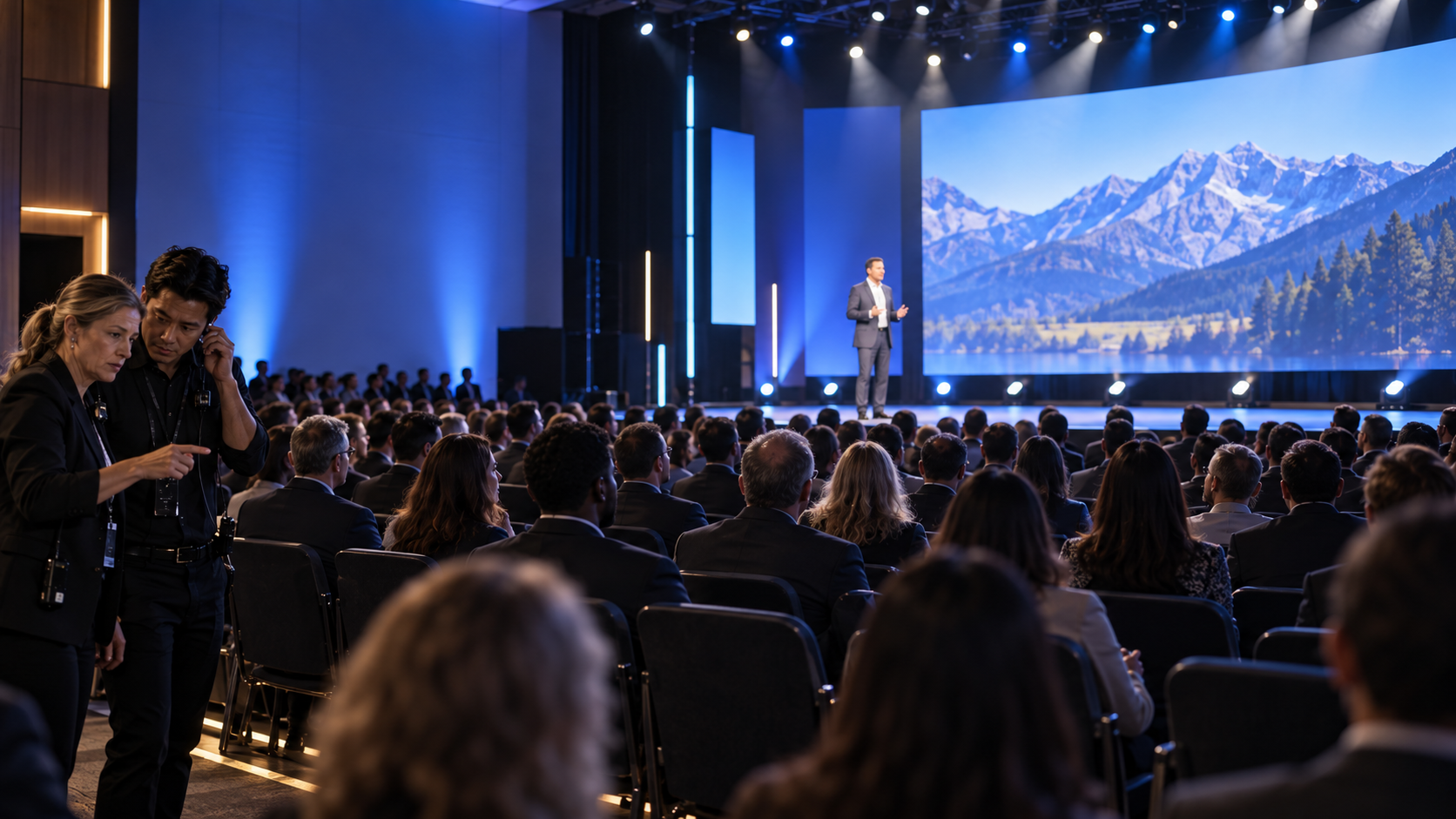
At a well-run event, the audience never learns how close things came. A keynote speaker gets stuck in traffic and no one in the room notices the reshuffle. A vendor misses a delivery window and lunch still lands on time. A last-minute request from the C-suite gets handled before it reaches the people it would have rattled. What the guests experience—and what the executives who staked their reputation on the day experience—is something smooth, intentional, and unhurried.
That smoothness is not luck. It is the visible result of a great deal of quiet, coordinated work, and it depends on event leadership under pressure that most attendees will never see. Guests and executives should not have to feel the challenges happening behind the scenes. When they do, something in the leadership chain has broken down.
Calm, in other words, is not a mood. It is an outcome. And like any outcome that matters, it can be planned for, produced, and delivered.
Calm is not the absence of problems
It helps to be honest about what calm actually is, because the word gets misused. A calm event is not an event where nothing goes wrong. Every program of any size carries friction—weather, technology, egos, timing, a room that behaves differently once it fills with people. The question is never whether problems will appear. They will.
The real question is whether the team has someone who can meet those problems without transmitting stress to everyone around them. Panic is contagious. So is composure. When the person leading on site stays organized and steady while solving something difficult, that steadiness spreads to the vendors, the crew, and the internal team who are all watching to see how bad it really is. When that person visibly unravels, the whole room tightens.
Calm is what allows problems to be solved quietly instead of publicly.
What produces calm
Because calm reads as a personality trait, it's easy to assume some people simply have it. In practice, it comes from a handful of concrete disciplines that any experienced operator can name.
It starts with preparation. Most of the calm you feel at a good event was created days earlier, in the run-of-show review, the vendor confirmations, the walk-through, and the quiet cataloguing of everything that could plausibly go sideways. A thorough leader has already imagined the awkward version of the day and decided, in advance, how to handle it. Very little that happens on site is truly a surprise to someone who prepared for the range of outcomes.
Then there's information flow. Pressure builds fastest when people don't know what's happening. An experienced onsite leader becomes the point where information gathers and gets routed—who needs to know what, when, and in how much detail. Executives get the clear headline. The crew gets the specific instruction. Nobody is left guessing, and nobody is buried in noise they can't act on.
Close behind it is ownership. On a complex event, the worst moments are the ones where something falls between roles and no one is sure whose call it is. Clear ownership removes that hesitation. When everyone knows what they hold and who holds the rest, decisions get made instead of debated.
Prioritization matters just as much. Under pressure, three things always seem urgent at once. Part of leading well is deciding, quickly and without drama, which one actually threatens the experience and which two can wait ten minutes. That judgment is hard to teach and easy to spot when it's missing.
Finally, escalation. Calm is not the same as handling everything alone. It's knowing which issues to absorb, which to delegate, and which genuinely need to reach a decision-maker right now. A good escalation instinct protects executives from noise while making sure the one thing they truly need to weigh in on actually reaches them in time.
Absorbing complexity without becoming the bottleneck
There's a failure mode worth naming here. A leader can be so central to the day that every question runs through them, and the effort to stay in control quietly turns them into the thing slowing everyone down.
The stronger move is to absorb complexity without hoarding it. An experienced onsite operator holds the full picture—the risks, the dependencies, the sequence—while still pushing decisions and authority out to the people equipped to act. They're inquisitive enough to catch the overlooked detail and secure enough not to touch everything themselves.
This is also why the senior onsite role works best as an integration, not a takeover. Courtney joins the internal, agency, and production team already in place. The planners, producers, and coordinators who built the program keep their roles and their expertise. What the senior execution layer adds is calm judgment across the whole environment—C-suite awareness, cross-functional coordination, and the ability to make fast, thoughtful calls when live conditions shift. It's the difference between staffing capacity and senior leadership capacity, and strong events often need both.
What confidence looks like to the people around you
Executives, vendors, and internal teams don't measure calm by how relaxed someone appears. They read it in behavior.
Executives relax when they can tell the person running the floor already knows what they were about to worry about. Vendors settle when instructions are clear, respectful, and consistent—when they're treated as partners rather than problems. Internal teams steady themselves when they see decisions being made without theatrics and questions being answered without defensiveness.
None of this is performance. It's the natural byproduct of someone who is prepared, organized, and fast on their feet, and who has seen enough events to recognize where this particular one is likely to bend. That kind of instinct isn't a claim about temperament. It comes from having handled the range of situations before and knowing, from experience, which ones warrant real concern.
Why calm makes the team faster
There's a misconception that a calm approach means a slow, cautious one. The opposite tends to be true. Panic narrows judgment. It fixates on the loudest problem, skips steps, and creates second problems while solving the first.
Calm widens the field of view. It lets a leader see the whole board, weigh options quickly, and act with a steady hand rather than a frantic one. Decisions made from composure are usually both faster and better, because they're made with full information and a clear head. Calm doesn't compete with speed. It's what makes real speed possible.
A readiness checklist before the doors open
Calm is easier to deliver when a few questions have honest answers before the event begins:
- Does one person hold the complete picture of the day, including the parts that could go wrong?
- Is it clear who owns each major function, with no gaps between roles?
- Is there a defined path for how information reaches executives—and a filter for what shouldn't?
- Does the team know which problems to escalate immediately and which to handle in place?
- Has someone walked the actual flow of the day, not just read the run of show?
- If the plan changed in the first hour, would the team adapt smoothly or scramble?
When those answers are solid, the room feels calm because the leadership is prepared. When they're vague, everyone finds out at the worst possible time.
Calm is a deliverable
It's worth treating calm the way you'd treat any other line item on a high-stakes event: something you intend to produce, not something you hope shows up. Guests and executives measure a program by how it felt, and how it felt is decided largely by whether the people leading it were steady when it counted.
If you're planning an event where the room, the reputation, and the details all have to hold, that steadiness is worth designing for on purpose. To bring an experienced onsite event professional into your program — someone who integrates with your existing team and helps it lead under pressure — start a conversation with The Standard. The best time to build calm into the day is before anyone in the room needs it.
Recent Posts