Why Tech Events Often Need More Human Hospitality
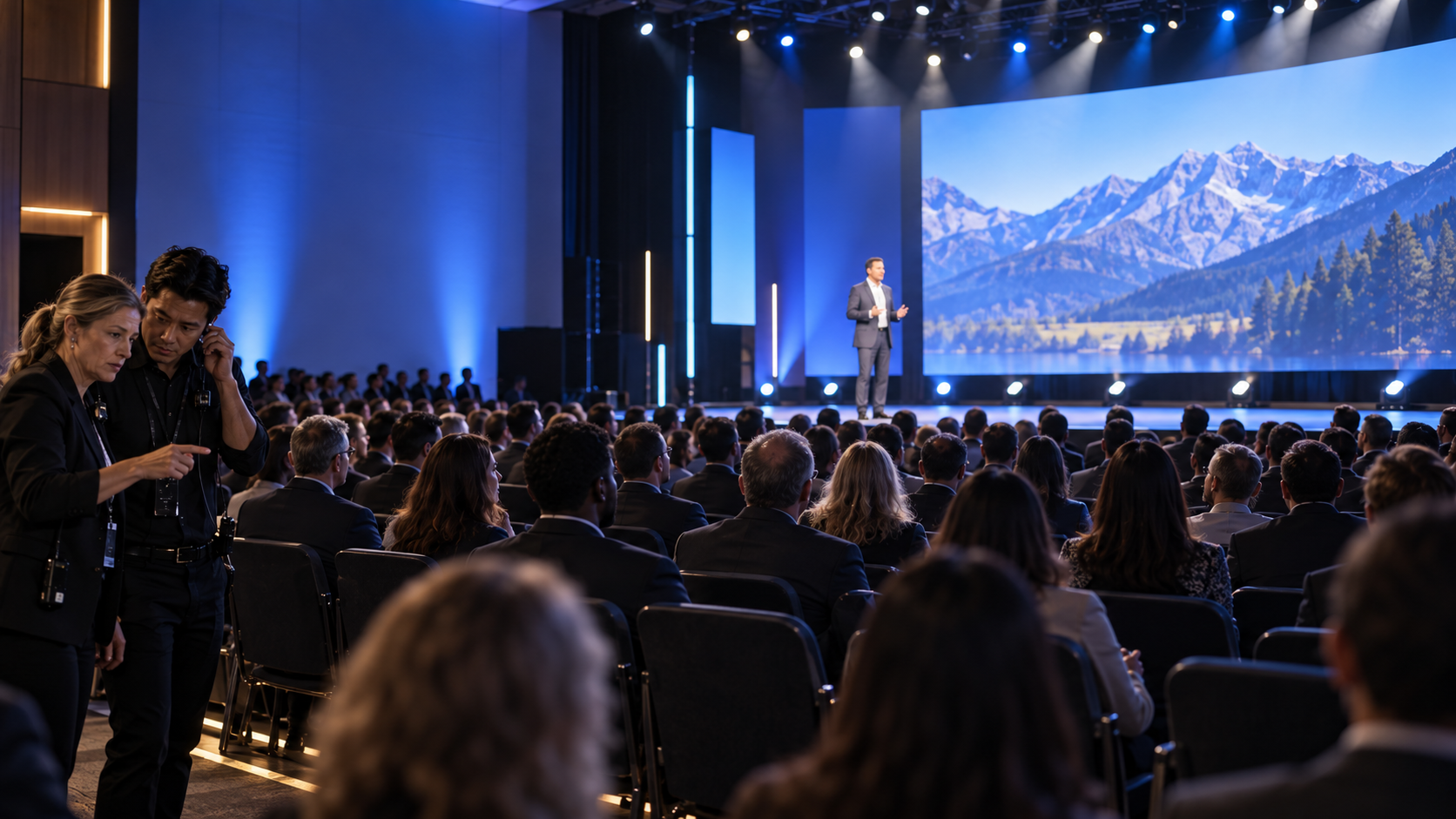
The keynote looked extraordinary. LED walls curved across the stage, the live demo ran flawlessly, and the product reveal earned genuine applause.
Then the session ended.
A few thousand people funneled into a corridor with three ambiguous signs, one overwhelmed staffer, and no obvious path to what came next.
The technology worked. The experience stalled.
That gap shows up at technology conferences more often than the production budget would suggest. The staging is ambitious, the event platform is sophisticated, and the content is strong—but the attendee experience can still feel surprisingly thin.
The problem usually isn't capability. It's where attention went while the event was being built.
An impressive stage can't fix a confusing arrival. A polished event app can't replace a person who notices a lost attendee and helps. A brilliant agenda can't compensate for a speaker who is backstage without water, a cue, or a calm answer to a last-minute question.
Content and production earn attention. What people remember is how the event felt.
The Human Layer Gets Less Rehearsal
Technology and event teams are rigorous. They rehearse the demo. Test the platform. Check the AV. Perfect the run of show.
But who rehearses the attendee experience?
Who walks the venue as a first-time guest? Who notices that registration creates a 20-minute bottleneck? Who tests whether someone can find the next session without asking for help? Who thinks about what a first-time speaker needs at 7:30 a.m. when something goes wrong?
These moments rarely appear on the production schedule, yet they shape the experience people actually live.
Arrival. Navigation. Transitions. Breaks. Speaker support. Executive care. The final goodbye.
There is a second event happening between the moments on the agenda—and that is the event attendees experience.
Hospitality Isn't Soft. It's Operational.
For some technology organizations, the word hospitality can sound soft or even off-brand.
In practice, it is anything but.
Hospitality means anticipating where people will get stuck and removing the friction before they feel it.
It looks like:
- Clear wayfinding
- Humane pacing and breaks
- Staff who know the answers—or know who does
- Speakers who feel prepared and supported
- Executives who have a trusted person looking after the details
- Someone empowered to make a thoughtful decision when the plan changes
None of this competes with a sophisticated technical brand. It reinforces it.
A company that creates a seamless, considered human experience is demonstrating the same competence it wants its product to represent.
Someone Has to Own the Whole Experience
The challenge is that the human experience crosses organizational lines.
Arrival might involve the venue, security, registration and event team. Speaker care involves content, stage management and AV. Executive support might involve communications, hospitality and leadership.
Everyone owns a piece. Someone needs to own the whole.
That is where experienced onsite leadership makes a difference. Not another person at the registration desk, and not a replacement for your producer or agency.
It is someone who can step back and read the room: What is about to become a problem? Where is the energy dropping? Who needs help before they ask? What decision needs to be made now?
The best onsite leaders create something every event team needs but rarely puts on the run of show: calm.
And calm is not a personality trait. It is something you can design for.
A Quick Audit of Your Tech Event Experience
Walk your next event as if you've never been there before and ask:
- Arrival: How long does it take to go from the front door to feeling oriented?
- Navigation: Could a first-time attendee find the next session without asking for help?
- Pacing: Are breaks long enough for the lines and crowds they create?
- Speaker care: Does every speaker know where to be, when to be there, and who to turn to when something goes wrong?
- Executive support: Who is responsible for making a senior leader's experience seamless?
- Final impression: Does the way people leave feel as intentional as the way they arrived?
The goal isn't to score perfectly.
It's to discover how much of your experience currently depends on luck—and how much you could design on purpose.
Make the Technology Land
Human hospitality at a technology event isn't about making a demanding day a little more comfortable.
It is about impact.
When people aren't distracted by confusion, unnecessary waiting, or avoidable friction, they are more present for the content you've worked so hard to create. They absorb more. Engage more. Trust more. And leave with a stronger impression of the company behind the event.
Thoughtful hospitality doesn't compete with technology and production. It makes both land.
So here's a simple place to start:
- Identify the most sophisticated part of your event—the element your team is proudest of.
- Then identify the most human moment—the moment when someone felt genuinely looked after.
- If there is distance between those two, that's your opportunity.
Your next event should feel as considered as it looks.
Recent Posts