Think about the last handful of businesses that genuinely took care of you. Maybe a dental practice that ran on time and walked you through what came next. A financial advisor's office where someone remembered your name and your situation before you sat down. A service department that told you the truth about what your car actually needed instead of padding the estimate. None of those places would call themselves hospitality businesses. Yet each one shaped how you felt, and that feeling probably decided whether you went back.
That is the quiet case for hospitality training for businesses that have never thought of themselves as being in hospitality at all. The word tends to conjure hotels and restaurants, so leaders in healthcare, professional services, retail, and finance assume it does not apply to them. It does. Any organization that serves people is already delivering an experience. The only question is whether that experience is designed on purpose or left to chance.
Hospitality is a behavior, not an industry
It helps to separate hospitality from the industry it is usually attached to. Hospitality is not a category of business. It is a way of paying attention to the people you serve and acting on what you notice. A clinic, a law office, and a car dealership can all practice it, and many quietly do, usually because one or two people happen to be good at it.
The problem with leaving it to a few naturally gifted people is that it disappears the moment they are out sick or move on. What one person does by instinct, a team can only repeat if it becomes a standard. That is the shift hospitality training is built to create: turning good instincts into shared expectations that hold up on an ordinary Tuesday, not just on the days your best person is working. If you want the fuller argument for why this belongs in every business, what unreasonable hospitality means in any business makes the point in more detail.
Friendliness is not the same as a standard
A lot of what passes for customer service training stops at friendliness. Smile, greet the customer, thank them on the way out. That is fine as far as it goes, but friendliness is a mood. It rises and falls with the day, and it tells no one what to actually do when a patient is anxious, a client is upset, or a transaction goes sideways.
Meaningful hospitality training gives a team something more durable than a good attitude. It defines what care looks like at specific moments, so that "take good care of people" stops being a slogan and becomes a set of behaviors anyone can learn. There is a real difference between the two, and it is worth understanding clearly, which is the subject of the difference between service and hospitality. Service is what you deliver. Hospitality is how people feel while they receive it. Training that only addresses the first half leaves the more memorable half to luck.
Map the experience before, during, and after
The most useful thing a manager can do is stop thinking about the core service in isolation and start looking at the full arc around it. Every customer interaction has three parts, and each one is a chance to build trust or lose it.
Before the service is everything that sets expectations: the booking, the confirmation, the wait, the first greeting, the paperwork. This is where people decide how much to trust you before you have done any real work. Getting these opening moments right matters more than most teams realize, which is why it is worth learning how to strengthen the first customer touchpoints rather than treating them as throat-clearing before the "real" appointment.
During the service is the work itself, plus the human layer wrapped around it. A competent procedure delivered with cold indifference and the same procedure delivered with attention feel like two different experiences to the person on the receiving end, even when the clinical outcome is identical.
After the service is the part almost everyone neglects. The follow-up, the clarity about next steps, the way a problem gets handled when something was not right. People forgive a lot when they feel taken care of after the fact, and they remember a clumsy ending long after they have forgotten a smooth middle.
When a team maps these three phases for their own business, gaps show up almost immediately. Usually they are not dramatic. They are small, repeated moments of friction that no one owns.
What managers have to do
Mapping the experience is the easy part. Making it consistent is a leadership job, and it comes down to three things.
The first is clear expectations. People cannot deliver a standard that has never been named. Vague encouragement to "provide great service" gives a team nothing to aim at. Specific, agreed-upon behaviors give them something they can repeat and be held to.
The second is permission. Good hospitality often lives in the moments a script did not anticipate, which means people need room to use judgment. A team trained to follow rules but never trusted to bend them will freeze at exactly the moment a customer needs flexibility. The goal is capable people who can read a situation, not staff reciting lines.
The third is recovery. Things will go wrong. The appointment runs late, the order is incorrect, the quote was misread. What separates a business people trust from one they merely tolerate is how it handles the miss. Teams that know they have both the permission and the plan to make things right will protect a relationship that a rigid process would have lost.
What this looks like across different businesses
The specifics change by industry, but the discipline does not.
In a dental or medical office, hospitality is the difference between a patient who feels processed and one who feels cared for, and it shows up in how the front desk manages a nervous first-timer as much as in the clinical work. In financial services, where the product is trust itself, small signals of attention and follow-through carry enormous weight. At a dealership, hospitality is what makes a service visit feel honest rather than transactional, and it often matters more to loyalty than the price on the invoice.
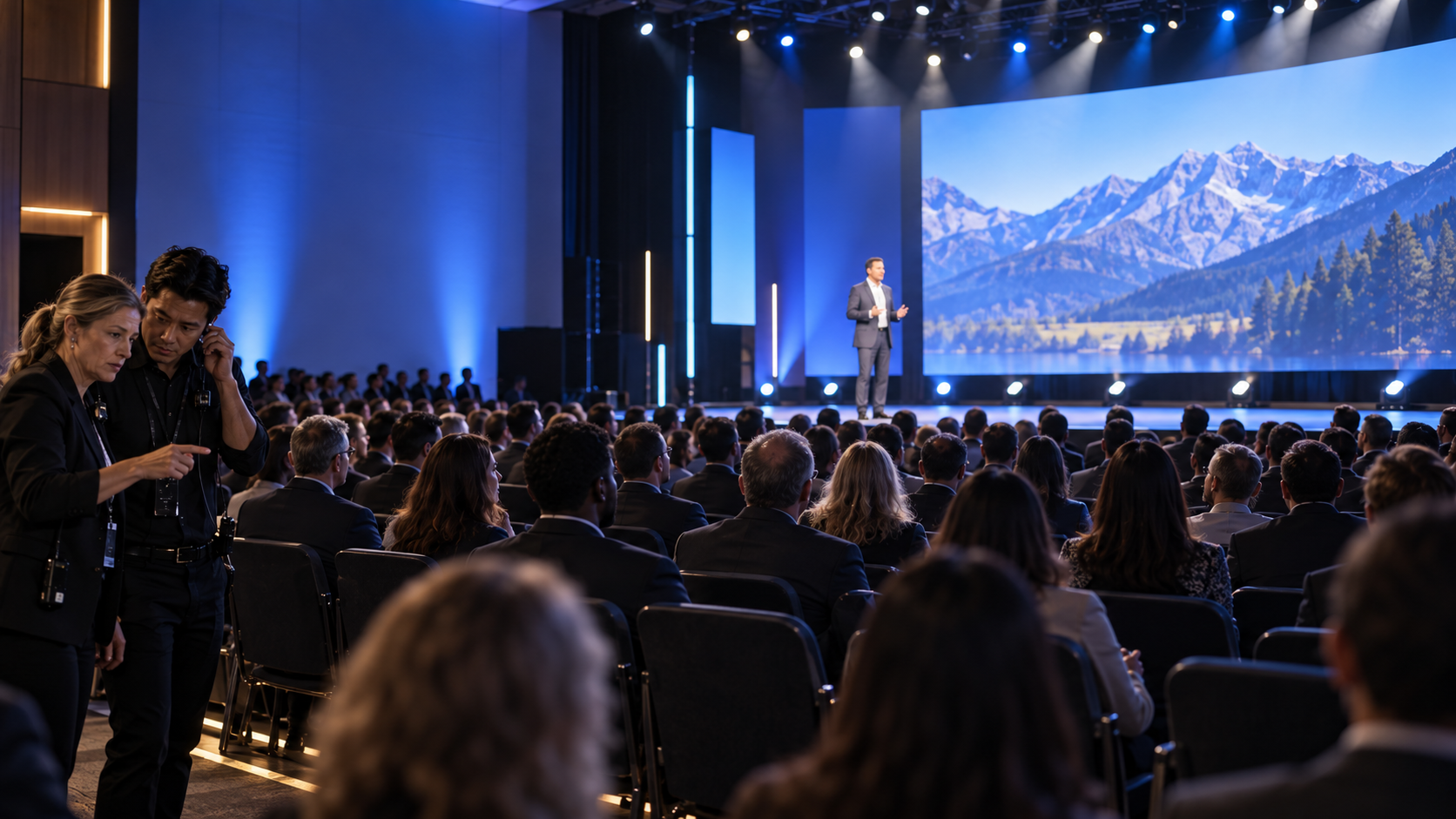
Professional services firms create an experience too, even when the "product" is advice delivered over email. And for organizations running high-stakes meetings and events, the hospitality shown to attendees, speakers, and crews is frequently what people remember long after the agenda is forgotten. None of this replaces technical skill. A dentist still needs to be an excellent dentist and an advisor still needs to be right about the numbers. Hospitality training sits alongside that competence; it does not stand in for it.
What a practical workshop should leave behind
A good hospitality workshop is not a pep talk. It should leave a team with a clearer shared language for what they are trying to create, a map of their own before-during-after experience, a short set of standards they helped write and actually believe in, and a plan for handling the moments that go wrong. Most of all, it should leave managers able to reinforce those standards after the trainer has gone home, because a standard that depends on an outside voice to survive was never really a standard.
If your team serves people and you want those moments to feel intentional rather than accidental, that is exactly the work The Standard's hospitality workshops are built to do — practical sessions designed for real teams in businesses that would never call themselves hospitality companies. You can read more about the experience behind this work if you want to know who would be in the room.
If you are ready to make hospitality a competitive advantage for your managers and customer-facing team, schedule a conversation and we can figure out the right starting point together.
Recent Posts